
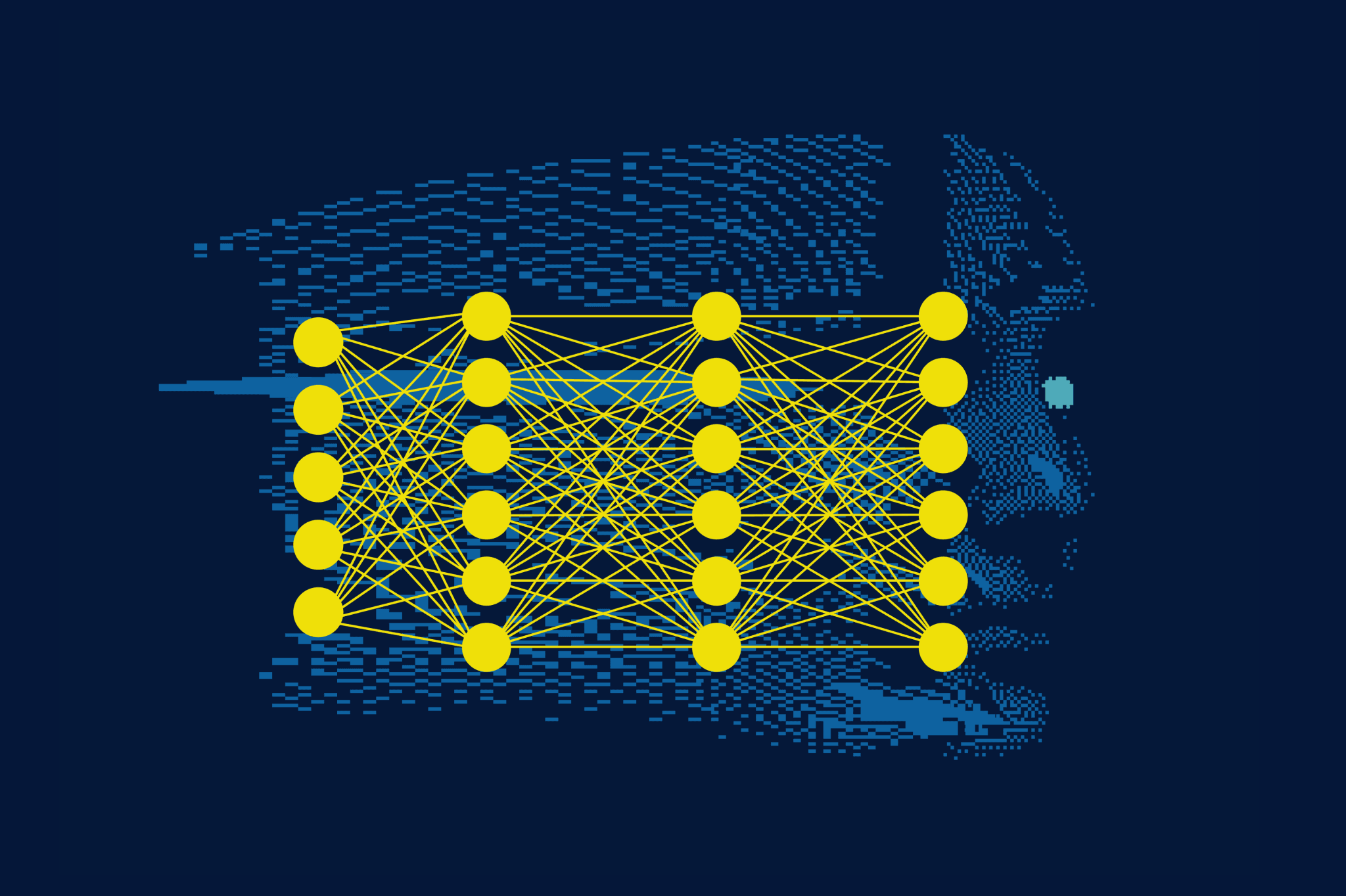
Exploring AI and the Future of Design
In September, UXPALOOZA 2025 brought together designers, researchers, and product thinkers to explore how artificial intelligence is reshaping human experience and the future of design. The virtual conference centered on one theme above all—AI’s growing influence on creativity, collaboration, and the practice of design.
Carimus Senior Graphic Designer Kaitlyn Wellborn attended sessions that examined what it means to design for and alongside intelligent systems. Her takeaway was clear: AI is accelerating change, but insight, empathy, and judgment remain uniquely human strengths.

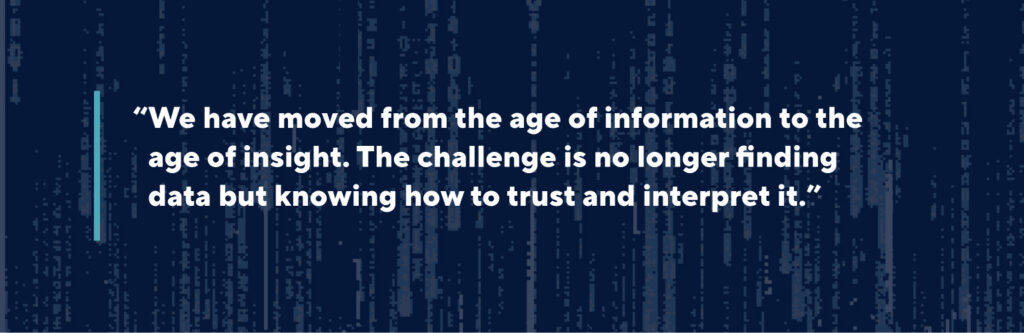
From the Age of Information to the Age of Insight
The internet gave us access to information. Artificial intelligence increases its volume and velocity, but it is still people who turn information into insight.
For decades, UX design has focused on helping people find, filter, and use information. Search tools, navigation systems, and clear hierarchies defined what good design looked like. But in an era where information is abundant and instant, people are no longer struggling to find answers. They are working to trust them.
We have entered the Age of Insight, where value lies not in the amount of data we can access but in how meaningfully we can interpret it. Designers are now responsible for helping users understand intelligent systems, question results, and navigate a world where automation shapes every interaction.
This shift also deepens the psychological side of design. Emotion has always been central to UX, but the focus is evolving. Where design once centered on making experiences feel easy and seamless, the challenge now is to make them feel human and trustworthy.
The human role in an automated world
One of the most persistent questions in design is whether AI will replace creative work. The answer from UXPALOOZA was simple: it will not.
AI can create, but it cannot connect. It can combine patterns, but it cannot care.
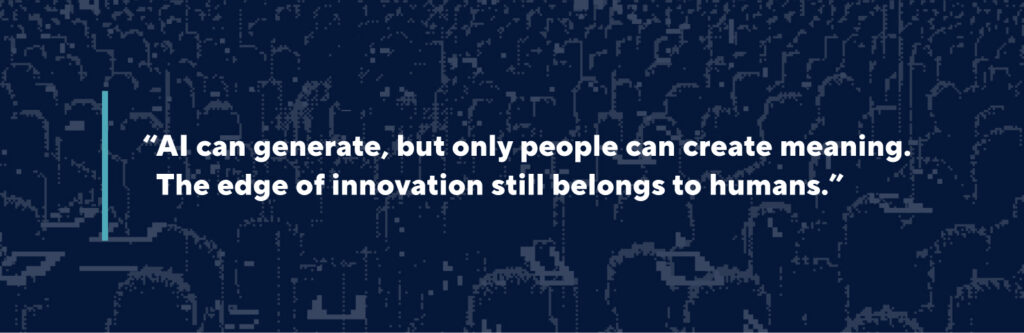
While AI systems can generate layouts, copy, and prototypes in seconds, they do so by drawing on existing content. They cannot interpret emotion or context in the way a human can. The edge of innovation still belongs to people.
Designers remain critical because they provide the empathy, inclusivity, and originality that AI lacks. Accessibility and representation do not emerge from data. They come from lived experience and cultural awareness.
As AI handles repetitive or technical tasks, designers are shifting from makers to strategists. They spend less time building single components and more time thinking about systems, intent, and outcomes. Creativity is not being replaced by AI. It is being refocused toward higher-level problem solving.
Designing for AI agents
AI systems are becoming more autonomous every day. They can now answer questions, make recommendations, and complete actions on behalf of users. This change has significant implications for UX design.
Instead of designing static interfaces, teams are learning to design for agents that act, respond, and adapt. These systems require new design considerations:
- Dynamic information architecture that updates based on context rather than a fixed hierarchy
- System modeling that anticipates what AI will decide and how users will respond
- Trust signals that make interactions transparent and understandable
Tools such as Google’s People + AI Guidebook and Shape of AI help designers think through the human implications of these systems. Platforms like Figma Make, UX Pilot, and Cursor show what rapid prototyping looks like when humans collaborate with AI in real time.
Designers are becoming architects of relationships. Their work defines how humans and machines communicate, how they share decisions, and how they build trust.
Artificial friction: when slowing down builds confidence
For most of design history, friction was something to eliminate. Seamless experiences were the goal. But in an AI-driven world, a perfectly smooth interface can feel unsettling.
Artificial friction introduces intentional pauses that make an experience safer and more human. These moments can appear as confirmation prompts, visible data summaries, or quick checkpoints that allow users to review before continuing.
When everything happens instantly, people begin to lose track of what the system is doing. A little friction restores awareness and trust.
Artificial friction can:
- Prevent unintentional errors or security lapses
- Encourage more mindful decision-making
- Strengthen confidence by showing transparency
- Reinforce ethical awareness in automated environments
The conversation at UXPALOOZA focused heavily on security, but the implications are broader. Designers must decide not only how to remove obstacles, but when to introduce them. A well-placed pause can make the difference between efficiency and unease.
Transparency as the foundation of trust
Trust has become the most important element of modern design. Without it, even the most advanced systems fail to connect with users.
Transparency is the key to earning that trust. It begins by explaining how AI systems work and what data they rely on. At a practical level, this means:
- Clearly stating when AI is involved in an experience
- Describing what information the system uses to make suggestions
- Allowing users to opt in or opt out before automation begins
- Avoiding unnecessary AI integrations that consume energy or create confusion
Many companies are adding AI simply because it is trending. Responsible design requires asking whether automation genuinely improves the experience.
Sometimes, restraint is the smarter choice.
Transparent design also empowers users to stay in control. A simple question like “Would you like to use AI for this?” can restore agency and make technology feel more like a partnership than an imposition.
Using AI as a partner in creativity
AI can be a powerful partner when used to extend human creativity rather than replace it. Designers can use AI tools to explore variations, test hypotheses, or speed up prototyping. The key is to treat every AI output as a starting point, not a finished solution.
This approach keeps human discernment at the center. AI can generate, but humans interpret. Designers still define goals, assess quality, and decide what belongs in the final product.
Using AI in this way creates space for curiosity and experimentation. It accelerates the creative process without compromising authenticity or intent.
The ethical landscape ahead
The rapid adoption of AI has created new questions about ethics, ownership, and consent. Designers now face challenges that extend beyond visual or interaction design.
When AI tools are trained on public work, who owns the results? When internal documents or client materials are shared with AI platforms, what happens to that information? These questions highlight the need for transparency and accountability.
Designers must collaborate with legal, data, and leadership teams to create policies that safeguard privacy and intellectual property. The principles that guide ethical design apply here as well: respect for people, clarity of communication, and responsibility for impact.
As AI becomes embedded in every stage of the creative process, maintaining these standards will be essential for building trust both inside and outside the organization.
Opportunities and challenges for emerging designers
For those entering the field, AI is both an opportunity and a challenge.
Generative tools make it easier to create prototypes and explore design ideas. At the same time, automation can limit hands-on experience with foundational tasks. Entry-level work that once offered valuable learning opportunities is now handled by machines.
This shift requires new kinds of mentorship and education. Future designers will need to understand how to collaborate with AI responsibly, evaluate its results, and identify where human insight is most valuable.
Technical skills will remain important, but the next generation of UX professionals will also need strong foundations in ethics, systems thinking, and communication.
The designer’s mindset for the future
As AI continues to evolve, so will the role of the designer. The work is becoming less about creating individual interfaces and more about orchestrating relationships between humans and intelligent systems.
The most valuable skills moving forward include:
- Interpretation: making sense of AI outputs and turning them into meaningful solutions
- Ethical awareness: knowing when to question or challenge automation
- Storytelling: helping users understand complex systems through clear communication
- Adaptability: staying curious and open as tools and technologies change
Designers who embrace these skills will continue to shape the future of digital experience.
Balancing intelligence and intuition
UXPALOOZA 2025 captured a pivotal moment for design and for the way we think about human work more broadly. Artificial intelligence is changing how we build, learn, and make decisions across every field. It is reshaping processes, accelerating outcomes, and redefining what it means to create.
Yet it is also reminding us of what cannot be automated.
Good design has always been about empathy, about understanding needs, motivations, and frustrations, and then translating that understanding into thoughtful solutions. The same principle applies across every area where AI is at play. Behind every algorithm, workflow, and system is still a person interpreting meaning, making choices, and deciding what matters.
As technology grows more capable, the responsibility to keep it human grows stronger. The task ahead is not only to design with intelligence, but to act with intention.
Designing with purpose at Carimus
At Carimus, we see that responsibility as core to our work. Whether we are developing digital products, building brand experiences, or designing internal tools, our goal is the same: to create technology that reflects human values.
AI is part of that evolution, but it is people who shape its purpose. We believe the most meaningful innovation happens at the intersection of insight and empathy, where data meets understanding and technology serves creativity.
The future will belong to those who can balance insight with empathy, speed with care, and innovation with integrity, and we are excited to help lead that conversation.
You deserve better than “drag-and-drop and hope.”
September 16, 2025
Next.js on AWS
May 23, 2023